Thursday, February 23, 2012

Did you actually feel sympathy for this woman?


Finding sympathy for Mary Rowlandson was difficult for me. She'd been held in captivity for merely eleven weeks and six days. Her tale just sounds like a really bad camping trip to me. Many people may disagree with me, but I feel a little information on our world today will shed some light on my argument.

Pictured above is a girl by the name of Jaycee Lee Dugard. The photo was taken in 1991, when she was eleven years old. That year she was abducted by a man named Phillip Garrido. Of course, officials didn't find out the kidnapper was him until 2009. During those eighteen years, she'd been hidden in a compound in the man's backyard. I'm not going to go into major detail, but the reader should try to remember her age. When she was rediscovered, two more girls were also found. One was fifteen years old, and the other was eleven. They were Jaycee's daughters, fathered by Garrido. I'd say Rowlandson's captivity is close to a walk in the park. She'd probably talk about her Indian captors a little more respectfully with this tad bit of knowledge. (http://www.cleveland.com/nation/index.ssf/2009/08/girl_kidnapped_at_11_and_held.html)

In Mary Rowlandson's time a woman may have been seen as weak and unable to protect herself, but even today a child is always seen this way. Compared to statistics of today, the couple hundred people kidnapped by Native Americans is a laughable number to the tens of thousands kidnapped every year in the Americas today. (http://www.nationmaster.com/graph/cri_kid-crime-kidnappings)

This trailer is from the 2004 film Man of Fire. The film is set in Mexico, which has one of the highest abduction rates worldwide. I'm hoping that my point is coming across more clearly now. When we read these old stories about people long gone, it makes it easy for us to detach ourselves from the crisis. I personally felt no sympathy for her, and I actually hated her for the way she spoke of the Native Americans. As if you couldn't be more ignorant. The only reason we still read this stuff today is because we like to fool ourselves into believing the writing bears importance. (http://www.library.csi.cuny.edu/dept/history/lavender/rownarr.html) I doubt anyone my age actually cares about some Puritan woman being captured by Native Americans. The Puritans deserved everything they received from the Natives. Anyone would agree if they knew about all the terrible things the Puritans did to the Indians.
My final argument is this. Trapped in a trunk sounds worse than a walk in the woods!

Tuesday, February 14, 2012

Why should I care about Thomas Paine?

While reading sentence after sentence of seemingly never-ending torture, I started to ponder a few things. Why are students required to read this junk? I mean to me "Common Sense" just sounded like a bunch of common sense. How am I supposed to know if Thomas Paine was truly a patriot or a master of propaganda at the time?     Maybe I'm just annoyed that we're given a little bit of information about these authors, and then we are expected to actually care about their writings. Perhaps if I use this blog assignment to hopefully find out more about Paine, then I'll care. Is that not the biggest nose you've ever seen on a human being?

Paine was a white man born in the eighteenth century, and he was anti-slavery. Now that's definitely a unique trait of the time. Even "The Great" General Washington owned slaves. (I use that sarcastically, because history shows us that Washington was a terrible military commander.) At twelve years of age, Paine had failed out of school. Paine also failed as a soldier in the continental army, but he was very influential in motivating the other troops. Paine was poisoned by his brilliance. Far ahead of the thinkers of his time, Paine was frequently criticized and even imprisoned once for his outspoken original views. At a time when most of the world was under the rule of kings, Paine spoke out against monarchies. Back when the church was never questioned, Paine questioned it.(http://www.ushistory.org/paine/) (http://www.historyguide.org/intellect/paine.html)

During the time of our revolution, troops did not fight during the winter. Armies would shack up for the winter. When the American cause seemed pointless after a series of defeats, Paine's "The Crisis" rallied the troops for an unheard of winter battle. Below is the famous painting of Washington and his men heading to battle.
Paine was an outspoken deist. He would die a lonely man due to this. Today it would be less serious to write about religious views. There will always be devout extremist though. Men who will never respect another man's beliefs, although neither offer concrete proof. In Paine's time, almost everyone alive was an extremist. It's surprising that church officials didn't behead him an scatter his limbs to the four corners of the country. Yeah, they did worse. I must admit that I now partially understand why I should care about this influential man.(http://www.let.rug.nl/usa/B/tpaine/paine.htm)

Thursday, February 9, 2012

How many Great Awakenings are there? How have they impacted the United States?

In reading Jonathan Edwards' "Sinners in the Hands of an Angry God", I noticed that his sermon is dramatically different from many preached today. Most churches speak of God's love and limitless mercy in today's world. This made me wonder about how much the Christian world has transformed in the past three hundred years. There must have been other grand revivals in America to have changed the worlds delivered behind the pulpit so dramatically.

Jonathan Edwards is one of the more renowned preachers of the First Great Awakening. He started the preaching style to become associated with the type of sermons given in this era. George Whitefield and the Wesley Brothers are sometimes credited with the beginning of this mass revival. They were the ones to bring a strongly emotional style to their congregations.(http://www.conservapedia.com/First_Great_Awakening)
 
The initial Great Awakening started when some people started preaching of a personal relationship with God. This broke away from the old connection with God. It blocked out the old middle man, the church. Christians began to realize they could determine right from wrong with their consciousness. They no longer found it necessary to talk to a preacher about their questions. The First Great Awakening helped put Americans in the mindset to break away from English rule. The colonists started seeing themselves as Americans for the first time. Many historians credit this great revival with the existence of the United States as a nation. (http://www.great-awakening.com/?page_id=22)

The Second Great Awakening began shortly after the American revolution in the early nineteenth century. The United States was rapidly changing, and many people were uneasy about the sudden changes surrounding them. America's population had increased from five million to nearly thirty million people. Cities were emerging out of the Industrial Revolution. To address these changes the Second Great Awakening spoke strongly of good work ethic and the chances of advancing in rank in society. Along with this came the belief of the American dream and temperance. Anti-slavery groups, feminist groups, and the Civil War are all strongly connected to these great tent revivals of this time period. The realization of equality among all people eventually formed and was reinforced thanks to the sermons of this Great Awakening. (http://www.ushistory.org/us/22c.asp),(http://www.press.uchicago.edu/Misc/Chicago/256626.html)


Most historians agree that these are the only Great Awakenings up to date. There are arguments that there was a third in the early twentieth century, and many people believe we are currently going through one. I disagree, but the whole concept is disputable. The percentage of the World's Christian population is falling. Many people claim to be non-religious. The estimated worldly percentage of this group stands around thirteen percent. Below is Glenn Beck of Fox News arguing his belief on the situation.


Tuesday, January 31, 2012

What are the religions of the World? How do they coexist?

Puritanism and Anne Bradstreet are just a tiny pieces to the large pool of the World's religions. In almost every history class taken since elementary school, I've heard about the Puritans. I honestly could care less about learning more about them, but I've never really thought about how many religions there are in the world. There are 33,820 different denominations in Christianity alone. Amazing when you think that when the the belief started there was only one. Everyone has different beliefs, but I've never explored the differences of those beliefs.  http://www.philvaz.com/apologetics/a120.htm
The exact number of religions in the world today is just an estimated number, however, most theologians agree that there are two hundred and seventy major religions in the world today. As far as religions that believe in a higher power goes, only four have a single God. These are the monotheistic groups: Judaism, Christianity, Islam, and Sikhism. All others fall into the polytheistic group, meaning a belief in more than one divine being. Below are sixteen of the thousands of Hindu gods  .http://www.hyperhistory.net/apwh/essays/cot/t0w03monopolytheism.htm, http://www.religioustolerance.org/worldrel.htm
Every devout believer of any religion only trust in their own religion. The opposing number of beliefs have caused many conflicts throughout history. The most famous in our history are the Crusades. Constant battles taken place over many centuries for the conquest of Jerusalem. The most heard of modern day wars take place in the Middle East and Africa between different denominations of Islamic belief or against the Jews of Jerusalem. 


Today, the United States is one of the leading examples of religious tolerance. In a world devastated by constant Holy Wars, this is a good thing. There will never be one dominating religion. Trying to make it so is foolish and has been the cause for hundreds of millions of death throughout history. It's probably also a naive thought to believe that one day everyone will tolerate one another's beliefs. All we can do is educate everyone on the different theologies and hope everyone will understand why all of these religions exist.  http://thekingdomcome.com/religious_deaths


Tuesday, January 24, 2012

What happened to the English Roanoke colony?

Roanoke is highlighted on the map above.


In his works, John Smith mentioned the earlier English attempt at settling the New World. The colony of Roanoke is also know as The Lost Colony. Unfortunately, historians have failed to agree upon solid evidence that would explain exactly what happened to the first English settlers. The facts that we do have are interesting, and there are many theories to this baffling event.

A famous English mogul and explorer by the title of Sir Walter Raleigh funded the expedition after receiving permission from Queen Elizabeth I. She gave him a ten year deadline to build up a suitable base in the New World for the English navy. This would be very helpful to England in their constant conflicts with Spain and a safe-haven to English pirates. The first attempt in founding Roanoke in 1584 failed with the settlers being malnourished, when Raleigh happened to drop by and find them in this condition. He decided to take them back to England, but left fifteen of his men to guard the settlement. (http://skeptoid.com/episodes/4245)

When the better provisioned second wave of Englishmen arrived in Roanoke, there was no sign of the fifteen men. John White was appointed governor of Roanoke, and his wife bore a daughter by the name of Virginia Dare. She was the first English child to be born in North America. Thanks to the previous settlers causing hostility with the natives, White and the colonists of Roanoke found themselves involved in numerous skirmishes with the natives on the island. Being outnumbered and fearing for their lives, White and a few select men returned to England in 1587 to ask Raleigh for help. The conflict between England and Spain complicated matters, and White was not able to return to Roanoke until 1590. Upon their return, they discovered only small cannons, an opened chest, and a single word carved into a fence post, "Croatoan." Further attempts at settlement of the colony were immediately abandoned. (http://www.jhu.edu/jhumag/1101web/roanoke.html)

There are many theories to what happened. Only two seem to be probable, but there isn't any evidence that completely throw the others out the window. Some people believe the colonists simply left the colony. Hurricane theories were disregarded, because the fence post surrounding the settlement had been unharmed. Maybe the people were all killed by the Natives. This is a very valid theory, especially when considering the unfriendly relations between the two groups. One theory states, however, that the colonists actually decided to live with the natives. Only time will tell if anyone discovers the actual truth of the event. (http://theshadowlands.net/roanoke.htm)

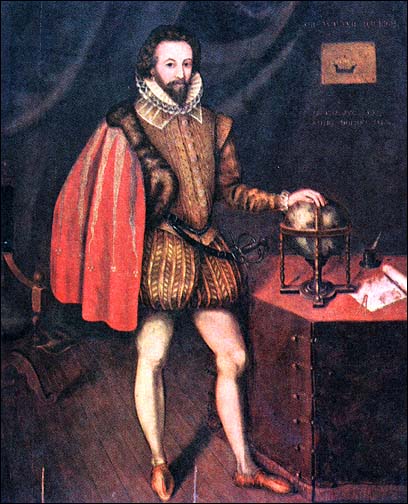
Below is a video of the longest-running outdoor symphonic drama in the world, The Lost Colony. Has been annually performed for seventy-five years, written by Pulitzer Prize-winning  Paul Green. There is also a photo of Sir Walter Raleigh.


Tuesday, January 17, 2012

About Me

Hey everyone, my name is David Akin. I'm a sophomore at JSU. American Literature 201 and American History 202 are the only two basics I have left to complete. Which means after this semester, I'll have to finally choose a major. I was born in Honolulu, but somehow managed to grow up in Centre, Alabama. Population: 3500. I really enjoy reading, but I only read the reading assignments in my classes. Not that I don't like it enough to read outside of college, I just enjoy other activities a lot more. My hobbies: hanging out with friends, working out, playing basketball or video games, listening to dubstep, etc. I find almost anything involving other people enjoyable. Didn't mean to sign up for a hybrid class, but I guess I can try it.